

The Federal Government of Nigeria has earmarked N8.05 billion in the 2026 Appropriation Act for the construction, renovation and rehabilitation of Churches and Mosques across Nigeria, despite a N31.45 trillion fiscal deficit in its spending plan.
An analysis of the 2026 budget by Tracka, BudgIT’s project-tracking and accountability initiative, shows that the allocations cover 59 religious infrastructure projects spread across several states and implemented through ministries, departments and agencies (MDAs), many of which have mandates unrelated to the construction of places of worship.
The 2026 budget has a total expenditure of about N68.3 trillion, with a projected fiscal deficit of N31.45 trillion, representing about 46 per cent of the total budget.
Of the N8.05 billion earmarked for religious projects, N6.14 billion is allocated to 52 mosque-related projects, while N1.91 billion will fund seven church projects.
The budget contains provisions for constructing new mosques and churches, renovating existing worship centres, installing solar power systems, providing boreholes, furnishing religious buildings, rehabilitating Islamiyya schools attached to mosques, fencing worship centres and constructing imam residences.
Some of the biggest allocations include N1 billion for provision of alternative power supply to Mosque in Zamfara North, N280 million each for the renovation of mosques and provision of mini grids in Zamfara Central Senatorial District, the renovation of Central Mosque Minna and Paiko Central Mosque alongside the provision of carpets.
The budget also sets aside N210 million for the construction of Tsafe Town Fifth Jumu’at Mosque, an Islamiyya school, administrative offices, fencing and an imam’s residence in Zamfara State, while another N210 million is provided for solar lighting in mosques and graveyards in the same senatorial district.
Other high-value projects include N200 million for the construction and furnishing of a mosque and Islamic centre in Kebbi State and another N200 million for the construction of a mosque in Kano State.
Several other projects ranging from N50 million to N150 million are scattered across Kano, Kaduna, Kebbi, Sokoto, Jigawa, Lagos, Ogun, Gombe, Enugu, Taraba and other states for mosque construction, rehabilitation, solar electrification and water projects.
The church allocations are comparatively smaller, with seven projects valued at N1.91 billion. Among them is the N50 million earmarked for the renovation of a church building in Ologoche, Bayelsa East Senatorial District, while other church-related projects cover construction and rehabilitation works in different parts of the country.
Findings show that another N1 billion was budgeted for provision and distribution of musical/cultural equipment to churches in Bende LGA, Abia state.
Many of the religious projects are assigned to agencies whose statutory responsibilities have little or no connection with religious infrastructure.
They include institutions under the Ministries of Agriculture and Food Security, Labour and Employment, Science, Technology and Innovation, Marine and Blue Economy, Water Resources and Sanitation, Housing and Urban Development, Health and Social Welfare, Humanitarian Affairs, and the Office of the Secretary to the Government of the Federation.
Others are the National Productivity Centre, Nigerian Building and Road Research Institute, Energy Commission of Nigeria, Federal Co-operative Colleges, National Institute for Oceanography and Marine Research, Border Communities Development Agency, National Commission for Almajiri and Out-of-School Children Education, Usmanu Danfodiyo University Teaching Hospital and two River Basin Development Authorities.
The ICIR reports that Nigeria has become increasingly reliant on borrowing to finance its budgets and development programmes.
Data from the Debt Management Office (DMO) show that the country’s total public debt climbed to N159.28 trillion as of the end of 2025.
In the 2026 Appropriation Act, the Federal Government allocated about N15.8 trillion to debt servicing alone.
Despite this, the Nigeria government has continued to borrow to ‘support’ its projects.
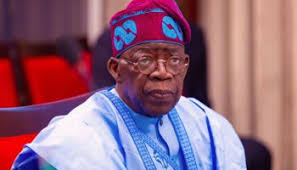
Recall that on Thursday, April 23, President Bola Tinubu sought the Senate approval for a loan to support the Sokoto–Badagry Superhighway project.
He requested for the approval despite the current oil windfall for the Nigerian government, occasioned by the United States war in Iran and huge revenue accruing to the government’s coffers from the petrol subsidy removal.
The request also followed the president’s request in March, that the National Assembly approve a N9 trillion increase to the 2026 budget, alongside fresh external borrowing totaling $6 billion to support government spending, infrastructure, and debt obligations.
The revelations prompted criticism from civil society groups and social media users, who questioned the government’s spending priorities at a time when Nigeria faces a ₦31.45 trillion budget deficit, rising debt obligations and growing demands for investment in healthcare, education and infrastructure.
The Northern Christian Association (NCA) also raised concerns over what it described as an imbalance in the distribution of the allocations.
“The imbalance has raised serious concerns about equity, fairness, and equal treatment of all Nigerians, regardless of their religious affiliation,” NCA Chairman Joseph Hayab said in a statement.
While stressing that the association was not opposed to government support for religious projects, Hayab urged the federal government to review the allocations to ensure fairness, transparency and adherence to constitutional principles.
Nigeria’s 2026 budget, tagged the “Budget of Consolidation, Renewed Resilience and Shared Prosperity”, is based on projected revenue of about ₦34 trillion against planned expenditure of ₦68.32 trillion.
Tracka urged citizens to monitor the implementation of projects in their communities, while there has been no immediate response from the presidency or the ministries linked to the allocations.
The government has been warned over funding of Churches and Mosques noting that such corrupt practices must stop. Questions have also been raised about fairness of the distribution of the lagesse on why ₦1.91 billion was allocated to seven church-related projects while ₦6.14 billion was allocated to 52 mosque projects across several ministries and agencies without direct responsibility for religious affairs.
“This corruption must stop, in a place where there are no more public libraries. Why are the Church and Mosque projects hidden in the budget?”
Thank you for reading PTL News. PTL News has existed for over 30 years now, providing the Christian public with qualitative and informative news reports globally, Online and in Print.
We humbly request for your hand of support in advert placement so that we can continue to serve you with more godly, authoritative, truthful, and juicy news regularly.
For your support/advertisement of your programmes, products and services, online and Print, please reach out to us @ 234-8033260387
Our Bank Account Details:
Bank Name: First Bank PLC
Account Name: GOSPEL ARTS PROMOTIONS
Account No: 2005034558. God bless you.


Leave a Reply